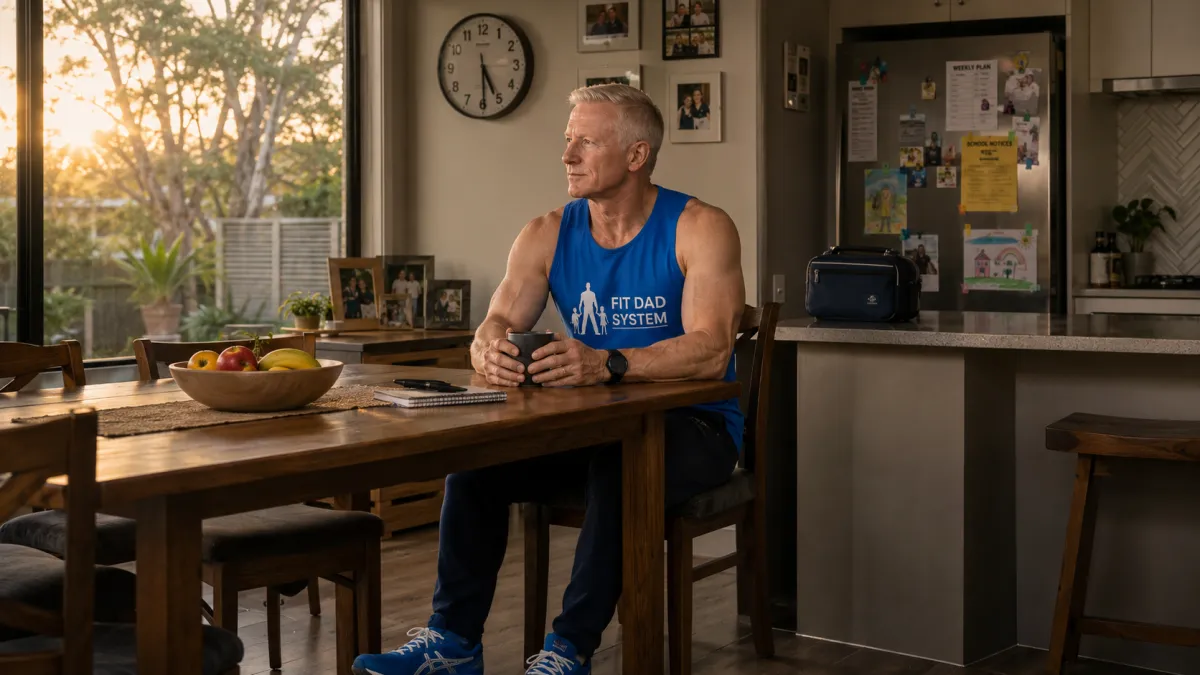
The Exhaustion Nobody Sees
ISSUE #2
Brad Flynn
The Exhaustion Nobody Sees: Explores why so many dads 40+ feel constantly drained, and how years of carrying the weight of work, family and responsibility can leave them running on empty.
Most dads I talk to think they're tired because they're getting older.
It's a pretty common conversation.
A bloke will tell me he's in his late forties, fifties or sixties now and he'll shrug his shoulders as if being exhausted all the time is simply part of getting older. His energy isn't what it used to be. He struggles to get motivated. By the time he gets home at night, he's got nothing left in the tank.
For a long time, I accepted that explanation too.
But the more dads I've worked with over the years, the less convinced I've become that age is the real problem.
A few months ago, I was talking to a dad after a training session. Good bloke. Hard worker. Loves his family. The sort of guy who would drop everything to help someone else if they needed a hand.
As we were putting the weights away, I asked him how things were going.
He looked at me for a second and said, "Honestly mate, I'm just tired."
I laughed and said, "Yeah, but what sort of tired?"
Because there's a difference.
You can be physically tired after a hard workout or a busy week. Most of us know what that feels like. You get some rest, catch up on sleep and generally you're right again.
This felt different.
He stood there for a moment and then said something I reckon a lot of dads would relate to.
"I don't think I'm physically tired anymore. I think I'm tired of carrying everything."
That one stuck with me.
Not because it was dramatic.
Because it was honest.
And I think a lot of men are carrying that same feeling around without ever really talking about it.
When most people look at a dad's life from the outside, things often seem fine. The bills are getting paid. The kids are growing up. Work is busy. Life keeps moving. There might be a few challenges here and there, but nothing that looks unusual.
What people don't see is the constant mental load sitting underneath it all.
They don't see the financial pressure that comes with raising a family. They don't see the concerns about your kids and the decisions they're making. They don't see the conversations you have with yourself at three o'clock in the morning when you wake up thinking about work, money or whether you're doing enough.
Most dads carry far more than people realise.
And most of them carry it quietly.
That's probably one of the reasons emotional exhaustion is so difficult to recognise. It doesn't always look the way people expect. Sometimes it looks like I'm losing motivation. Sometimes it looks like I'm becoming impatient. Sometimes it looks like withdrawing from people. Sometimes it looks like I'm feeling flat for no obvious reason.
You don't necessarily feel broken.
You just don't feel like yourself.
I know that feeling.

Responsibility came into my life pretty early.
When Mum developed Parkinson's disease, I found myself helping out in ways most ten-year-olds never think about. At the time, I didn't sit there feeling sorry for myself. I simply did what needed to be done. Looking back now, I can see how much those experiences shaped me.
They taught me responsibility.
They taught me resilience.
They taught me how to keep going when things got hard.
They're valuable lessons.
But there's another side to responsibility that nobody really talks about.
If you're not careful, responsibility can become your entire identity.
You become the bloke who fixes things.
The bloke who solves problems.
The bloke who carries the load.
The bloke everybody depends on.
At first, that feels good because you're contributing. You're helping. You're doing your job as a father, husband and provider.
But after enough years, something interesting can happen.
You get so busy carrying everybody else's problems that you stop paying attention to yourself.
Not intentionally.
Gradually.
A bit like rust.
You don't notice it happening until it's already there.
Over the years I've coached dads from all sorts of backgrounds. Tradies. Business owners. Office workers. Shift workers. Dads with young kids. Dads with adult kids. The details are always different, but the pattern is surprisingly similar.
Most of them don't come to me because they want bigger arms.
Most don't even come because they desperately want to lose weight.
What they're usually chasing is energy.
They want to wake up feeling good again.
They want to stop dragging themselves through the day.
They want to stop feeling like every week is something they have to survive.
And that's why I've never believed fitness is really about fitness.
For dads especially, it's often about something much deeper.
It's about reclaiming a bit of yourself.
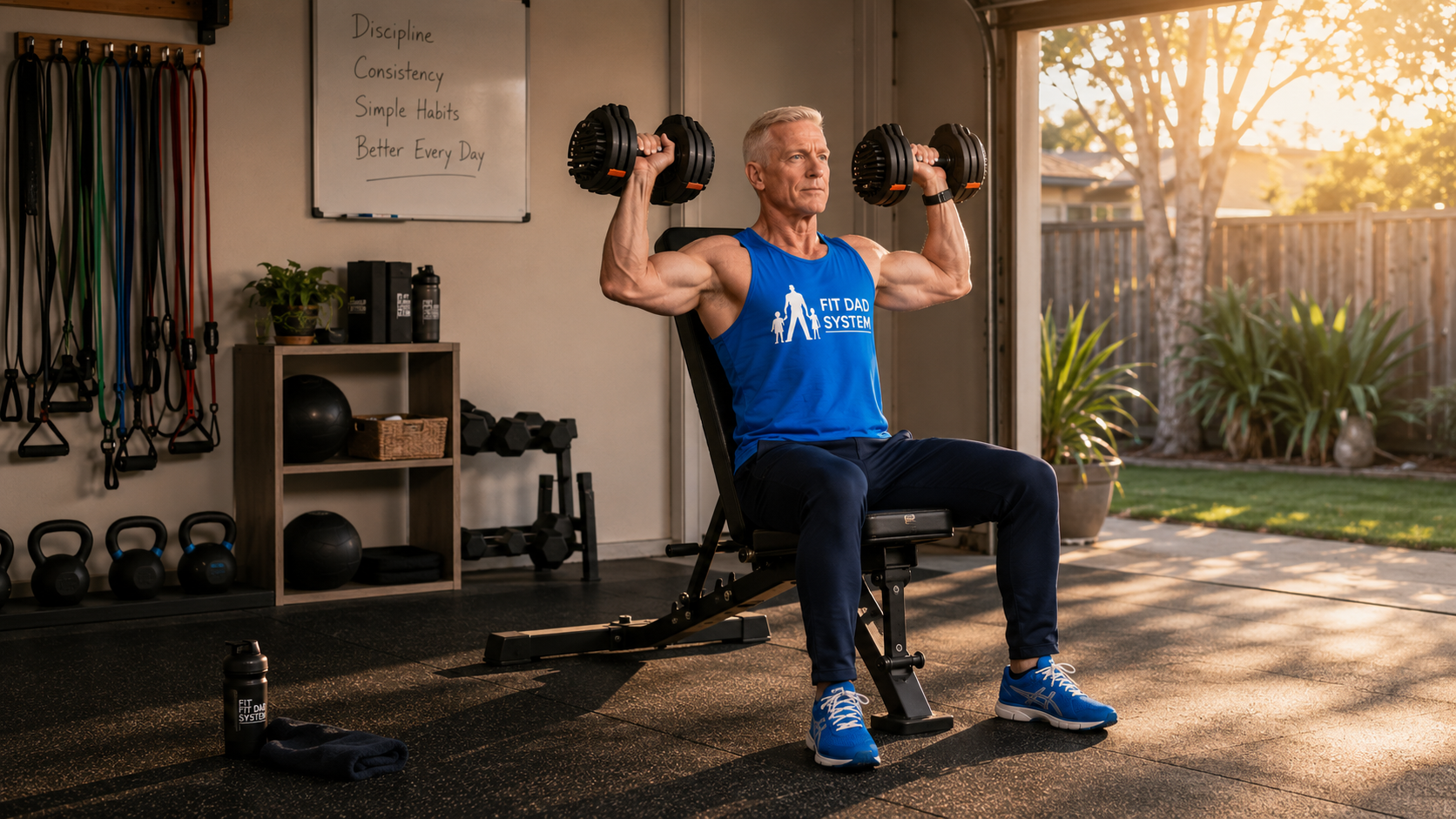
Because when you start exercising consistently, something interesting happens.
Yes, your body changes.
But that's usually not the first thing you notice.
The first thing most dads notice is they feel better.
They sleep better.
Their head feels clearer.
Their stress levels come down.
They're more patient with their kids.
They're less reactive.
They're more present.
The weight loss comes later.
The muscle comes later.
The emotional shift often comes first.
That's why I think so many men end up searching for solutions in the wrong places.
They think they need a holiday.
A new car.
A new job.
A change of scenery.
Sometimes they think they need a completely different life.
What they actually need is recovery.
Not just physical recovery.
Mental recovery.
Emotional recovery.
The kind that comes from looking after yourself consistently instead of occasionally.
One thing I've noticed is that many dads stop doing the things that recharge them. Not because they don't enjoy them anymore, but because they convince themselves they're too busy.
The walk disappears.
The training sessions disappear.
The hobbies disappear.
The time with mates disappears.
Everything gets pushed aside because there are more important things to do.
At least that's what they tell themselves.
The problem is that the things we stop doing are often the very things that help us cope with everything else.
I've seen dads completely transform simply by creating a little space in their week again.
Not because they suddenly became fitness fanatics.
Because they started moving.
They started sleeping.
They started looking after themselves.
And when you look after yourself consistently, life feels lighter.
Not because your problems disappear.
Because you're better equipped to handle them.
There's a big difference.
I think that's where a lot of the fitness industry gets it wrong.
It focuses on six-pack abs.
Before and after photos.
Extreme transformations.
Fast results.
Most dads couldn't care less about any of that.
What they really want is enough energy to get through the day without feeling exhausted.
They want to play with their kids without needing to sit down afterwards.
They want to feel strong again.
They want to wake up feeling optimistic instead of flat.
They want to enjoy life.
That's a completely different conversation.
The good news is that rebuilding your energy doesn't require perfection.
It doesn't require training seven days a week.
It doesn't require giving up every food you enjoy.
It doesn't require turning your life upside down.
Most dads get the best results from doing a few simple things consistently.
Three workouts a week.
A daily walk.
A bit more water.
A bit more sleep.
A bit less junk food.
Nothing revolutionary.
Just consistent.
And consistency works.
Not because it's exciting.
Because it's sustainable.
That's one of the biggest lessons I've learned over the years, it’s the dads who get the best results aren't usually the most motivated.
They're the most consistent.
They keep showing up when they don't feel like it.
They keep moving when life gets busy.
They don't aim for perfection.
They aim for better.
And better eventually becomes different.
That's when the energy starts coming back.
That's when confidence starts returning.
That's when you begin feeling like yourself again.
The truth is that emotional exhaustion rarely disappears by itself. Most of the time, it stays in the background until we decide to do something about it.
The good news is you don't need to solve your entire life this week.
You don't need all the answers.
You don't need the perfect plan.
You just need a place to start.
Maybe that's a walk tomorrow morning.
Maybe it's getting to bed thirty minutes earlier.
Maybe it's dusting off the gym membership you've been paying for but not using.
Maybe it's deciding that your health deserves a place on the priority list again.
Whatever it is, start there because if there's one thing I've learned after decades of working with dads, it's this:
Most dads don't need more motivation.
They need more energy.
And energy can be rebuilt.
One workout.
One walk.
One better decision at a time.
You've got more left in the tank than you think.
[Download the Fit Dad System Guide]
Brad Flynn
Helping busy dads 40+ build muscle, burn belly fat, and boost energy. No diets. No excuses. No wasted time. No B.S.
Every week I share practical lessons on strength, fat loss, energy, mindset and life as a dad over 40.
If you'd like future newsletters delivered straight to your inbox, subscribe below.
Subscribe to The Fit Dad Letter
